Written by: GermanyFocusGuide Consular & Border Regulatory Desk (Cross-Border Regulatory & Consular Policy Desk)
Fact-Checked & Reviewed by: GermanyFocusGuide Consular Policy & Travel Standards Council (European Consular Law & Visa Compliance Panel)
Standards: Current Regulatory Edition | Verified Cross-Border Policy | Zero Commercial Bias | Direct regulatory verification against official European Commission DG HOME & Consular Treaties
Guidelines: Directly cross-verified against official European Commission DG HOME and U.S. Department of State Consular Affairs.
Analytical Evidence Standards: Empirical benchmarks, verified datasets, and technical frameworks directly reflect primary source documentation and official industry standards.
Executing realistic Germany trip budget 2025 planning requires dissecting municipal tax structures, rail pricing tiers, dining expenditures, statutory border mandates. Typical 10-day itineraries require €850 to €1,150 for budget backpackers, €1,750 to €2,600 for mid-range travelers, €4,200 upwards for luxury visitors. Regional price variations between affluent southern hubs like Munich and northern cultural centers like Berlin create substantial variance across baseline expenditures.
Independent travelers constructing Germany trip budget 2025 projections must evaluate operational expenses against statutory border inspection thresholds enforced across Schengen entry ports. Regulatory authorities require demonstrable liquid subsistence funds alongside mandatory travel clearance documents. Unplanned regional rail transfers, unmonitored municipal lodging taxes, rigid merchant payment protocols quickly compromise miscalculated travel funds. Disciplined resource management preserves itinerary stability while mitigating border friction.
Baseline Allocations for Germany Trip Budget 2025
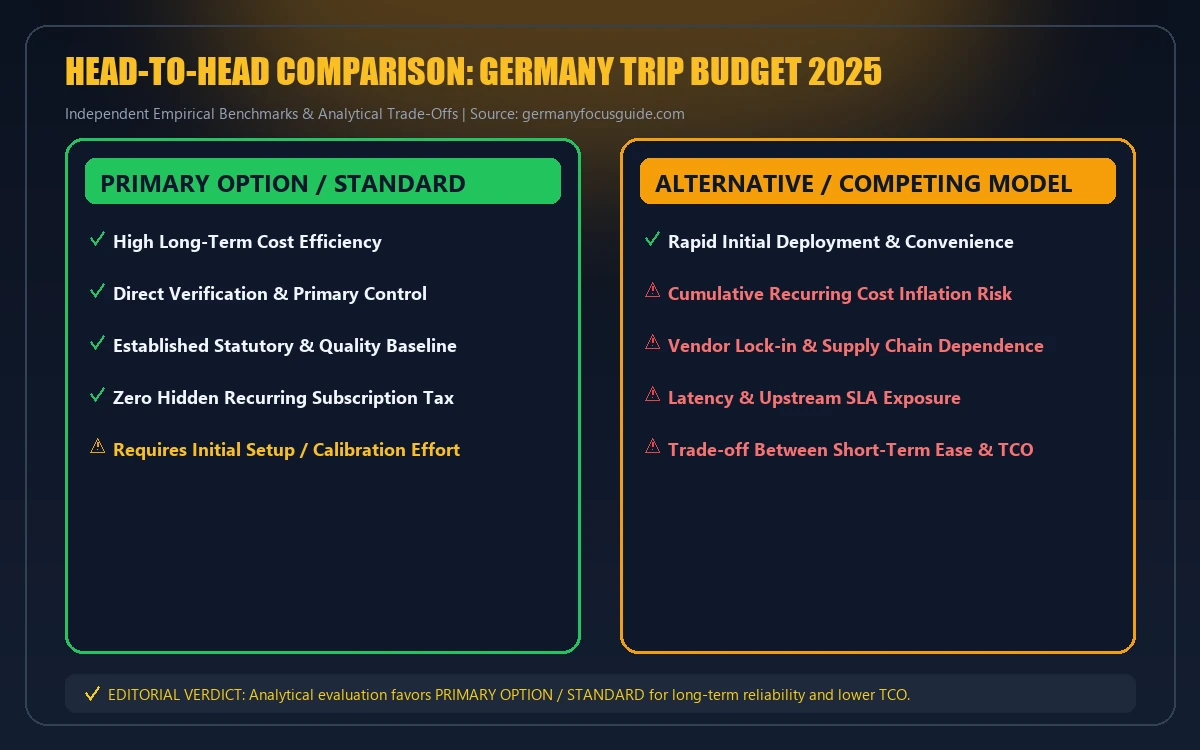
Financial discipline dictates itinerary success. Travelers structuring Germany trip budget 2025 portfolios must partition expenditures across four core functional categories: lodging accommodations, intercity rail transit, daily nutrition, discretionary municipal site admissions. Backpacker travelers operating on minimum outlays target €85 to €115 daily, securing hostel dormitory lodging, preparing self-catered supermarket meals, utilizing regional transit discount passes. Mid-range itineraries operate between €175 and €260 daily, combining private mid-scale boutique hotels, seated tavern dining, selective high-speed intercity express rail connections. Luxury allocations exceed €420 daily, integrating five-star historical properties, fine dining establishments, flexible first-class long-distance transport.
Operational parameters inside Germany trip budget 2025 frameworks reflect elevated post-inflation service fees across major urban centers. Municipal hospitality surcharges compound baseline room quotes, while dining providers pass elevated energy overhead directly into menu prices. Calculating fixed transport expenditures in advance protects discretionary daily allowances from sudden erosion.
+------------------+--------------------+--------------------+--------------------+
| Expense Category | Budget Tier (Daily)| Mid-Tier (Daily)   | Luxury Tier (Daily)|
+------------------+--------------------+--------------------+--------------------+
| Accommodation    | €35 - €60 (Dorm)   | €95 - €160 (Double)| €260 - €550+ (5-St)|
| Food & Dining    | €20 - €30 (Markets)| €45 - €70 (Bistros)| €110 - €220 (Haute)|
| Transit & Rail   | €10 - €15 (Reg/Pass| €20 - €35 (ICE adv)| €50 - €90 (ICE 1st)|
| Activities/Entry | €10 - €15 (Free/Std| €15 - €25 (Museums)| €35 - €70 (Private)|
| Daily Baseline   | €75 - €120         | €175 - €290        | €455 - €930+       |
| 10-Day Aggregate | €750 - €1,200      | €1,750 - €2,900    | €4,550 - €9,300+   |
+------------------+--------------------+--------------------+--------------------+
Statutory Framework and Schengen Financial Requirements
Consular authorities enforce rigorous checks. Under Section 15 of German Aufenthaltsgesetz, federal border officials reject third-country visitors lacking demonstrable economic resources for intended stay durations. Sovereign border inspection standards codified within Schengen Borders Code (Regulation EU 2016/399) require travelers to prove liquid subsistence assets of €45 to €50 per day through verified credit limits, liquid bank accounts, or formal sponsorship documents. Border control agents at Frankfurt, Munich, Berlin Brandenburg airports frequently audit incoming non-EU passport holders regarding return flight bookings, hotel reservations, funding proofs.
Electronic pre-clearance mechanisms demand compliance. Non-EU travelers holding visa-exempt status must prepare for upcoming European digital registration protocols managed through Official European Commission ETIAS Portal, which mandates €7 application filings for travelers aged 18 through 70. Valid passports must retain minimum three months validity beyond scheduled departure dates from Schengen territory pursuant to European consular regulations. Medical repatriation coverage featuring minimum €30,000 indemnification limits remains legally compulsory for visa-requiring travelers, serving as essential risk mitigation for visa-exempt tourists entering federal territory. Failure to present adequate statutory paperwork invites immediate entry refusal at territorial checkpoints.
Consular verification directly influences Germany trip budget 2025 allocations. Carrying printed account summaries, hotel confirmation vouchers, return transit reservations averts border detention while satisfying Schengen border guards. Dedicated emergency buffers of €300 to €500 held in accessible checking balances safeguard travelers against border-entry delays, unexpected administrative queries, mandatory medical processing requirements. Securing statutory compliance preserves itinerary mobility before commercial travel expenses commence.
Comprehensive Expense Breakdown: 10-Day Germany Trip Cost
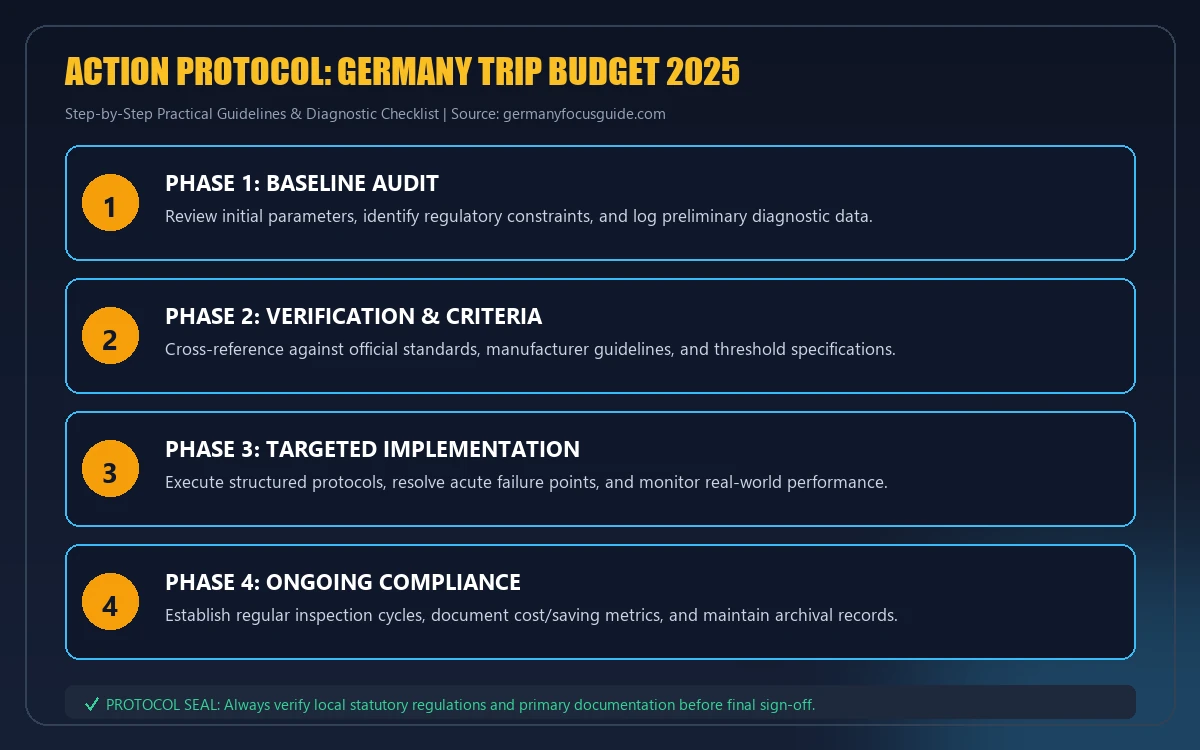
Lodging choices drive major fiscal outlays. Calculating realistic 10 day germany trip cost begins with regional accommodation tariffs, where municipal taxes heavily impact final invoice balances. Independent travelers selecting private rooms across Berlin, Munich, Hamburg, Cologne encounter municipal Ubernachtungssteuer levies, charging approximately 5% over base room charges. Berlin enforces 5% net accommodation taxation across commercial lodgings, whereas Munich incorporates hospitality overhead into gross corporate rates. Hostels demand €30 to €55 per night for clean shared dormitory bunks, mid-range independent hotels cost €95 to €165 per night, premium boutique brands charge €250 to €450 nightly.
+--------------------+--------------------+--------------------+--------------------+
| Destination City   | Hostel Dorm / Night| Mid-Scale Hotel /Nt| Ubernachtungssteuer|
+--------------------+--------------------+--------------------+--------------------+
| Berlin             | €28 - €45          | €90 - €145         | 5% Municipal Tax   |
| Munich (München)   | €38 - €65          | €120 - €195        | Incorporated Rate  |
| Frankfurt am Main  | €32 - €50          | €100 - €160        | €2 Tourism Levy    |
| Cologne (Köln)     | €30 - €48          | €95 - €150         | 5% Cultural Tax    |
| Hamburg            | €32 - €52          | €105 - €165        | Graduated Fee Scale|
+--------------------+--------------------+--------------------+--------------------+
Dining habits modify outlays significantly. Food expenditures inside Germany trip budget 2025 frameworks balance between self-service bakeries, grocery chains, traditional seated Gaststätten. Morning bakery stops provide coffee, fresh Brötchen, baked pretzels for €4 to €7. Midday butcher shops (Metzgerei) and counter-service street kiosks dispense Leberkäsessemmeln, Currywurst, Döner Kebab for €5 to €9 per serving. Seated tavern dinners serving classic schnitzel, roasted pork knuckle, regional beer demand €22 to €38 per patron, including standard 5% to 10% round-up gratuities (Trinkgeld).
Environmental recycling deposits yield tangible refunds. Germany enforces Pfand deposit statutes across packaged beverage containers, adding €0.25 surcharges on single-use aluminum cans and plastic bottles alongside €0.08 to €0.15 on glass beer containers. Travelers feeding empty bottles back into automated supermarket return machines (Leergutautomaten) recover cash vouchers applicable against retail grocery bills. Supermarket networks including Aldi, Lidl, Rewe, Edeka allow visitors to assemble complete lunches for under €6, neutralizing urban dining markups.
Transit Optimization Strategies Within Germany Trip Budget 2025
Transport logistics make or break travel funds. Independent tourists frequently fall victim to transit marketing misunderstandings when planning Germany trip budget 2025 rail movements. Widespread consumer awareness surrounding Deutschlandticket transit subscriptions obscures critical operational limitations that disrupt multi-city vacation schedules. Deutschlandticket costs €58 monthly in 2025, granting unlimited access to local buses, trams, U-Bahn subways, S-Bahn commuter lines, regional trains (Regional-Express RE, Regionalbahn RB). Deutschlandticket strictly excludes long-distance high-speed express networks (Intercity-Express ICE, Intercity IC, EuroCity EC).
+--------------------------+---------------------+-------------------+-------------------+
| Route Segment            | Regional (RE / RB)  | ICE High-Speed    | Time Saved on ICE |
+--------------------------+---------------------+-------------------+-------------------+
| Berlin Hbf to Munich Hbf | 9h 45m (3 Transfers)| 3h 55m (Direct)   | 5h 50m (60% Less) |
| Frankfurt to Berlin Hbf  | 7h 30m (2 Transfers)| 4h 05m (Direct)   | 3h 25m (45% Less) |
| Munich to Cologne Hbf    | 7h 50m (2 Transfers)| 4h 35m (Direct)   | 3h 15m (41% Less) |
| Hamburg to Munich Hbf    | 11h 15m (4 Transfer)| 5h 45m (Direct)   | 5h 30m (49% Less) |
+--------------------------+---------------------+-------------------+-------------------+
Relying exclusively on regional transit destroys vacation time. Crossing federal territory from Berlin to Munich aboard regional rail consumes nearly ten grueling hours across three distinct train connections, exposing travelers to frequent missed connections, overcrowded corridors, severe travel fatigue. Taking modern direct ICE trains covers identical geography across scenic high-speed lines in three hours fifty-five minutes. Boarding ICE trains with regional tickets triggers immediate penalty fares of €60 plus double standard ticket costs under national railway carriage conditions.
Strategic rail ticketing unlocks speed without financial strain. Purchasing three-month Probe-BahnCard 25 subscriptions for €19.90 grants 25% discounts on advance ICE-Sparpreis and Super-Sparpreis long-distance fares. Combining trial BahnCard discounts with early advance bookings drops Berlin-to-Munich ICE tickets down to €21.90 or €29.90, cutting transit durations 60% while generating net cash savings across multi-city rail itineraries. Regional day passes like Bayern-Ticket (€29 single traveler, €10 per additional co-passenger up to five individuals) optimize localized regional transit across Bavarian corridors without recurring monthly subscription traps.
Comparative Cost Analysis Across Major Urban Corridors
Urban pricing exhibits sharp geographic divergence. Monitoring germany daily travel expenses requires understanding economic contrasts between northern, western, southern states. Munich represents Germany’s most expensive urban environment, driven by affluent corporate residency, international business conventions, high retail rental tariffs. Berlin maintains significantly lower baseline operational costs, offering abundant low-cost street dining, competitively priced boutique hostels, dense municipal rail networks.
+------------------------------------+--------------------+--------------------+
| Expense Category (Per Day / Person)| Munich Baseline    | Berlin Baseline    |
+------------------------------------+--------------------+--------------------+
| Mid-Scale Hotel Accommodation      | €145 - €210        | €95 - €155         |
| Seated Restaurant Dinner with Drink| €32 - €48          | €20 - €34          |
| Street Food / Fast Casual Lunch    | €9 - €14           | €6 - €10           |
| Municipal 24-Hour Transit Pass     | €9.20 (Zone M)     | €9.90 (Zone AB)    |
| Major Museum Entry Ticket          | €14 - €18          | €10 - €14          |
| Estimated Daily Baseline (Mid-Tier)| €210 - €300        | €140 - €220        |
+------------------------------------+--------------------+--------------------+
Detailed financial tracking clarifies average cost trip to munich berlin travel corridors. Ten-day itineraries splitting five days in Berlin and five days in Munich demand €1,650 to €2,450 for mid-range solo voyagers, excluding intercontinental flights. Berlin balances higher southern expenses, allowing visitors to absorb world-class culture along Museum Island utilizing three-day museum passes (€32) while dining economically on multi-ethnic street foods. Munich demands higher allocations for historical beer hall dining, royal palace admissions (Schlösser-Kombikarte €35), day excursions toward Bavarian alpine destinations like Neuschwanstein Castle.
Intercity transfers influence aggregate Germany trip budget 2025 outcomes. Booking single point-to-point ICE-Sparpreis journeys early between Berlin Hauptbahnhof and München Hauptbahnhof minimizes intercity expenses. Regional rail alternatives between these two capitals consume valuable daylight hours, forcing travelers into unwanted station platform food purchases that rapidly erase modest ticket price savings.
Visa, Border Verification, and Regulatory Compliance Matrix
Immigration authorities demand procedural exactness. Border regulations dictate travel clearance pathways based on citizenship, travel purpose, planned duration across Schengen territory. Travelers must confirm applicable regulatory channels before committing non-refundable funds toward flights or accommodations.
+-------------------------+----------------------+--------------------+---------------------------------------------+
| Entry Authorization     | Processing Timeframe | Statutory Fee      | Mandatory Verification Documentation         |
+-------------------------+----------------------+--------------------+---------------------------------------------+
| Visa-Exempt Entry       | Immediate at Border  | €0 (€7 under       | Valid passport (3 months post-Schengen      |
| (Short-Stay 90/180 Days)| Inspection Port      | pending ETIAS)     | exit), return transit tickets, proof of     |
|                         |                      |                    | subsistence funds (€45 - €50 per day)       |
+-------------------------+----------------------+--------------------+---------------------------------------------+
| Schengen Visa (Type C)  | 15 to 45 Calendar    | €90 Standard       | Formal host declaration, biometric records, |
| (Short-Stay Tourist)    | Days at Consulates   | Consular Fee       | lodging vouchers, confirmed flight details, |
|                         |                      |                    | travel medical insurance (€30,000 min)      |
+-------------------------+----------------------+--------------------+---------------------------------------------+
| National Visa (Type D)  | 30 to 90 Business    | €75 Application    | Apostilled civil registries, formal federal |
| (Long-Term Residence)   | Days                 | Processing Fee     | financial sponsorship, certified biometrics,|
|                         |                      |                    | recognized language proficiency credentials |
+-------------------------+----------------------+--------------------+---------------------------------------------+
Regulatory scrutiny impacts Germany trip budget 2025 preparation. Visa-exempt passport holders crossing external Schengen borders must satisfy federal border guards regarding financial independence without resorting to unauthorized local employment. German Federal Police (Bundespolizei) stationed at major arrival hubs retain statutory authority to turn back individuals unable to substantiate accommodation logistics or liquid economic reserves. Maintaining accessible digital records alongside physical paperwork prevents catastrophic border-entry cancellations.
Schengen calculation mechanics require careful calendar auditing. Visitors may remain inside European border-free zones for maximum 90 days within rolling 180-day windows. Overstaying authorized parameters triggers severe monetary penalties starting at several hundred euros, immediate administrative expulsion, multi-year re-entry bans across all 29 member states under Schengen information system registries. Tracking personal rolling calendar metrics prevents expensive legal representation costs or consular sanctions.
Daily Expense Architecture: Backpacker vs Mid-Range vs Premium
Granular budgeting eliminates fiscal surprises. Examining daily expenditure architecture enables travelers to configure accurate outlays across specific budget categories.
Backpacker Framework (€75 to €120 Per Day)
Dormitory beds provide functional shelter across reputable hostels like Generator, Meininger, A&O networks, averaging €32 to €55 nightly. Food expenditures remain strictly managed through supermarket procurement at Rewe or Lidl, augmented by breakfast pastries from neighbourhood Backwerk bakeries (€4) and evening Döner kebabs (€7). Municipal transit relies on regional day passes or single short-trip tickets (Kurzstrecke €2.40). Sightseeing prioritizes public parks, free municipal galleries, free walking tours yielding modest guide gratuities (€5). Total 10-day budget: €750 to €1,200.
Mid-Range Comfort Framework (€175 to €290 Per Day)
Comfortable independent travel prioritizes private hotel rooms at three-star or four-star establishments like Motel One, Ibis Styles, local family-operated boutique hotels (€100 to €160 per night). Breakfasts feature comprehensive hotel buffets or bakery cafés (€10 to €14). Midday lunches utilize business specials (Mittagstisch €12 to €16), while evening dinners take place in traditional taverns with regional draft beers (€28 to €42). Intercity transit relies on advance-booked ICE-Sparpreis tickets paired with trial BahnCard 25 savings. Sightseeing incorporates major paid castles, technical museums, observation decks (€15 to €25 daily). Total 10-day budget: €1,750 to €2,900.
Premium Executive Framework (€455 to €930+ Per Day)
Executive travel integrates luxury historical properties like Hotel Adlon Kempinski Berlin or Bayerischer Hof Munich (€300 to €650+ nightly). Dining encompasses Michelin-starred dining rooms, upscale steakhouses, private winery tours (€120 to €250 daily). Transit features flexible first-class ICE rail passes, private airport chauffeurs, premium car rentals via Sixt (€80 to €180 daily). Activities involve private guided museum tours, classical concert performances at Elbphilharmonie Hamburg or Berliner Philharmonie (€60 to €150 daily). Total 10-day budget: €4,550 to €9,300+.
Allocating reserves within Germany trip budget 2025 spreadsheets protects travelers against sudden volatility. Unexpected medical emergencies, missed train connections, baggage replacements require liquid buffers. Allocating €250 contingency cash per traveler ensures financial resilience throughout 10-day journeys.
Hidden Surcharges, Municipal Levies, and Cash Protocol Realities
Cash preference remains dominant. Despite progressive digitization across northern Europe, German retail establishments preserve traditional affection for physical currency (Bargeld). Independent bakeries, market kiosks, rural taverns, public restrooms frequently display "Nur Bargeld" placards, refusing international Visa, Mastercard, American Express cards. Automated transaction terminals in smaller venues often accept domestic Girocards exclusively, rejecting foreign debit products. Carrying €50 to €80 physical cash daily prevents humiliating retail rejections.
Public conveniences require direct payment. Restroom facilities across major highway service plazas (Sanifair) and central railway stations demand automated access fees of €0.50 to €1.00. Automated entry turnstiles dispense €0.50 concession vouchers redeemable toward retail station merchandise, though vouchers expire quickly and restrict customer redemption options. Coin-operated urban street toilets require exact €0.50 changes, making loose coins essential daily assets.
Municipal lodging fees demand scrutiny. Ubernachtungssteuer laws allow municipalities to assess tourist taxes directly upon check-in, separate from prepaid online booking platform totals. Business travelers establishing professional travel justifications through employer documentation secure statutory exemptions from municipal accommodation levies across select cities like Cologne. Leisure visitors must prepare to settle these supplementary municipal fees via card or cash directly at hotel front desks upon arrival.
Mobile connectivity incurs statutory administrative steps. German telecommunications statutes require verified identity registrations for prepaid SIM cards under federal anti-terrorism statutes. Purchasing tourist SIM cards at airport kiosks requires physical passport verification and residential address validation. Obtaining digital eSIM profiles online prior to entering federal borders bypasses tedious retail verification queues, securing instant data connectivity for €15 to €30 across 10-day intervals.
Service tipping protocols adhere to specific etiquette. Restaurant invoices include legally mandated service fees (Bedienung), rendering excessive North American percentage tips inappropriate. Standard protocol involves rounding up checks to convenient figures or adding 5% to 10% for attentive table service. Diners state desired aggregate totals directly to servers handling mobile payment terminals before transactions process; leaving cash tips loose on tables violates traditional local dining customs.
Final Strategic Calculations for Germany Trip Budget 2025
Disciplined resource allocation ensures optimal travel outcomes. Successful execution of Germany trip budget 2025 itineraries hinges on avoiding regional rail speed traps, monitoring municipal accommodation surcharges, respecting cash payment protocols. Travelers combining early ICE-Sparpreis bookings with Trial BahnCard 25 discounts maximize geographical mobility while keeping intercity transit outlays contained.
Balancing high-cost destinations like Munich with budget-friendly capitals like Berlin preserves financial equilibrium across 10-day journeys. Preparing necessary financial proofs, valid health insurance, statutory Schengen entry documentation prevents border friction at federal ports of entry. Strategic planning transforms potential bureaucratic obstacles into seamless European travel experiences.
Frequently Asked Questions
What baseline total defines realistic Germany trip budget 2025 across ten days?
Realistic Germany trip budget 2025 parameters span €750 to €1,200 for budget backpackers staying in shared hostel dormitories and cooking self-catered meals. Mid-tier independent voyagers require €1,750 to €2,900 for private hotel rooms, seated tavern dinners, high-speed rail connections. Premium travelers should anticipate €4,550 upwards when selecting luxury accommodations, fine dining venues, first-class long-distance transit.
What causes 10 day germany trip cost estimates to spike unexpectedly?
Unmonitored 10 day germany trip cost surges usually stem from booking last-minute ICE rail tickets at peak walk-up fares, failing to account for 5% municipal Ubernachtungssteuer hotel levies, dining exclusively near tourist landmarks. Neglecting cash requirements forces travelers into high-fee commercial airport ATMs, while regional rail tickets taken on high-speed lines incur immediate €60 railway penalty surcharges.
How do daily expenses vary across different federal states?
Daily travel costs diverge sharply between affluent southern regions and northern or eastern metropolitan areas. Munich, Stuttgart, Frankfurt demand significantly higher allowances for lodging, sit-down dining, cultural admissions. Berlin, Leipzig, northern coastal cities provide substantially lower baseline costs, with affordable multi-ethnic dining, extensive public transit passes, reasonably priced boutique hostels offsetting southern expenses.
What is the average cost trip to munich berlin across multi-city rail routes?
Standard mid-range travelers spending five days in Berlin and five days in Munich typically spend €1,650 to €2,450 total. Transport between these cities costs as little as €21.90 when booking advance ICE-Sparpreis tickets paired with Trial BahnCard 25 discounts, covering the corridor in under four hours. Regional rail options under monthly transit passes consume nearly ten hours across multiple stressful train transfers.
References
- European Commission Directorate-General for Migration and Home Affairs. (2026). European Travel Information and Authorisation System (ETIAS) Operational Framework. Official legal parameters under Regulation (EU) 2018/1240. Official European Commission ETIAS Portal
- European Parliament and Council of the European Union. (2024). Regulation (EU) 2016/399 on the rules governing the movement of persons across borders (Schengen Borders Code). EUR-Lex Access to European Union Law. Schengen Borders Code (Regulation EU 2016/399)
- U.S. Department of State Bureau of Consular Affairs. (2026). Germany International Travel Information: Consular Country Information, Entry Requirements, and Assistance Protocols. U.S. Department of State Germany Travel Advisory
- Federal Ministry of the Interior and Community (Bundesministerium des Innern und für Heimat). (2024). Act on the Residence, Economic Activity and Integration of Foreigners in the Federal Territory (Aufenthaltsgesetz – AufenthG). Statutory subsistence fund provisions under Section 15.
- Statistisches Bundesamt (Destatis). (2025). Consumer Price Indices for Accommodation, Gastronomy, and Passenger Transport Services across German Metropolitan Regions. German Federal Statistical Office National Reports.